The surprising truth about multi-faceted dice
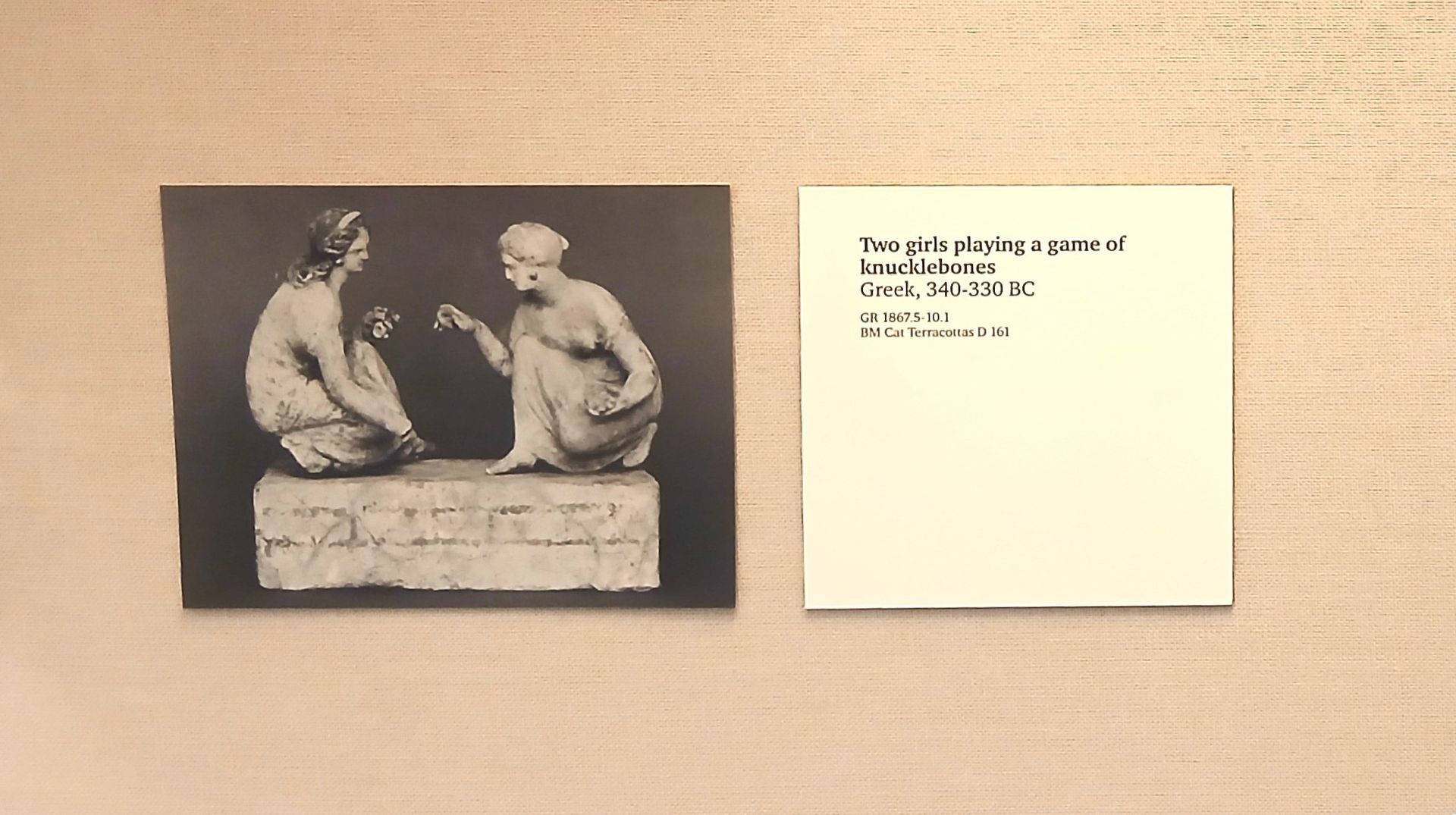
The first dice were knuckle bones, small bones from the feet of herd animals like sheep or goats. Their consistent shape means that when thrown they fall on one of four sides. The oldest are 7 000 years old and were used for divination as well as games.
Then in Mesopotamia we find the first pyramid dice, made of four equilateral triangles. The ones from a grave site in Ur are over 4 500 years old but unlike modern dice they don’t have numbers. Each one has a white spot on two of their points, several die would be thrown at once and counting the spots gives the number. The game they were found with is either the ancestor of modern Backgammon or a closely related cousin.
Around the same time, we find the first 6-sided dice, discovered in the 1920’s on an archaeological dig in Tepe Gawra in Iraq. Holes had been made in all six sides to represent the numbers, but the order was different to a modern die. There is a reference to a distillation devices found on this site too which could indicate a connection between dice and alcohol which I find very pleasing.
Then two thousand years later, in 500 BCE we see the first 8-sided shape, an octahedron made of eight equilateral triangles, two of the four-sided added together. We also find the dodecahedron, a 12-sided shape with pentagonal faces. There are Roman 12-sided die with Roman numerals or the signs of the zodiac on them. Fools-gold, pyrite, which is often found in a similar shape, is a possible inspiration for this dice.
The last shape made in the ancient world was the icosahedron or 20-sided shape. This shape does not occur in the natural world, it was invented; someone worked it out. Later the Greeks, using mathematics and geometry proved that there could only be five platonic solids, the 4-, 6-, 8-, 12- and 20-sided shapes. These are the first dice, and this knowledge is thousands of years old.